Stop Small Problems Before Full Replacement
Driveway Patching in Pittsfield for potholes and isolated surface damage spreading across high traffic areas
Potholes don't appear out of nowhere — water finds a small crack, freezes, expands, and breaks the surface apart until the base underneath is exposed. Once that starts happening, it moves fast, especially through a Pittsfield winter. Patching those problem spots early is a lot easier than dealing with sections that need full reconstruction later.
Good patching isn't just filling the hole. We clear out the loose material, fix whatever drainage issue caused the failure in the first place, and compact the new material flush with the surrounding surface. Skip the drainage fix and the same spot breaks down again within a season — so we make sure we're solving the actual problem, not just covering it up.
Reach out for an assessment and we'll take a look at what's going on with your driveway and what kind of repair makes sense.
What Happens After Patching Is Finished
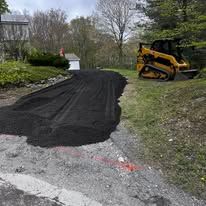
Patching lets us fix what's actually broken without tearing up the parts that are still in good shape — which means you get more life out of your driveway without paying for a full replacement. We cut clean edges around the damaged spots, pull out any unstable base material, and fill it back in with compacted layers that sit flush with the rest of the surface. That edge prep matters too — it's what keeps the patch from separating every time a vehicle rolls over it.
Once the repairs are done, the difference is noticeable. No more dropping into depressions or catching raised edges on the way in and out. Water drains off properly instead of pooling in spots that get worse with every storm. And for commercial properties, a clean, even surface makes a real difference in how your property looks to customers.
That said, patching has its limits. If more than about 20% of your surface is showing damage, the repair costs start creeping up toward replacement pricing — and new patches have a harder time holding when the surrounding areas are already breaking down. Catching things early is always the better move. The longer surface issues sit, the more likely you're looking at excavation and full reconstruction down the line.
Common Questions About This Service
Customers typically want to know how long patches last, when to repair versus replace, and what causes damage to recur in the same locations.
How long do patched areas last?
Properly installed patches that include drainage correction typically last three to seven years, depending on traffic load and winter severity. Patches without drainage improvements often fail within two seasons as water continues to undermine the repair.
What causes potholes to form in the first place?
Water seeps through surface cracks, saturates the base layer, and expands when it freezes. Repeated freeze thaw cycles break apart the pavement from underneath, creating voids that collapse under vehicle weight.
Can patching delay the need for replacement?
Yes, repairing isolated damage early prevents water infiltration that spreads to adjacent sections. This approach extends driveway life by five to ten years when the majority of the surface remains structurally intact.
Why do some patches sink or crack quickly?
If the base material isn't compacted properly or drainage issues aren't corrected, water continues to erode the foundation beneath the patch. Proper repairs address both the surface cavity and the subsurface conditions that caused it.
When should I just replace the whole driveway?
When damage covers more than a quarter of the surface, or when patches from previous repairs are already failing, replacement becomes more cost-effective than ongoing patching cycles that address symptoms rather than underlying problems.
Fast and cost-effective patching solutions from 2nd Alarm Trucking, Inc. improve safety, functionality, and appearance for both residential and commercial properties. Contact us to schedule responsive service and discuss how drainage improvements can prevent future damage.